
Why Does Copper Turn Your Skin Green?
The natural character of copper, explained.
A copper bracelet brings warmth and distinctive character to everyday style. Its colour catches the light beautifully, whether worn with a simple shirt or a favourite knit. Over time, however, you may also notice a temporary greenish mark where the bracelet rests against your wrist.
Why does copper turn your skin green? Copper can react with moisture, perspiration and substances on the skin, creating copper compounds that may leave a greenish residue. This is a natural characteristic of exposed copper and does not, by itself, mean that your bracelet is faulty.
Here is what causes it, why it varies from person to person, how to remove the mark and how to care for your bracelet’s particular finish.
Why Does Copper Leave a Green Mark?
Copper reacts with moisture and substances it encounters during wear, including sweat and skincare products. These reactions can produce coloured copper compounds, some of which may transfer onto the skin as a greenish residue.
The mark sits on the surface of the skin and can normally be washed away. It is part of the natural interaction between exposed copper and its environment rather than, by itself, an indication of a defective bracelet.
Why Is It More Noticeable on Some Days?
Warm weather, perspiration and contact with lotions or skincare products can affect the reaction. You may notice a mark after an active day and very little at another time.
The amount of exposed copper and the condition of any protective finish also matter. This is why not every wearer — or every copper bracelet — will behave in exactly the same way.
Is a Green Mark the Same as a Skin Allergy?
A green stain alone is generally harmless and is different from an allergic rash. Itching, redness, blistering or persistent irritation should not be dismissed as ordinary staining.
Remove the bracelet if these symptoms occur and seek medical advice if they persist or are significant.
How Do You Remove Green Marks from Your Skin?
Gently wash your wrist with mild soap and warm water, then rinse and dry it. Avoid vigorous scrubbing or using metal-cleaning products on your skin.
The temporary colour left by copper will normally wash away as the surface residue is removed.
How Can You Reduce Green Marks from a Copper Bracelet?
- Start with a clean, dry wrist. Allow skincare products to absorb and dry before putting on your bracelet.
- Wipe after wear. Use a soft, clean cloth to remove moisture and residue, including from the inside surface.
- Keep it dry between wears. Store your bracelet away from damp surfaces.
- Follow the care instructions for its finish. Bare copper, lacquered copper and plated surfaces need different treatment.
These simple habits can help limit residue build-up, although exposed copper may still leave occasional marks as part of its natural reaction with the skin and environment.
What About Lacquered and Plated Copper Bracelets?
Most polished SABONA copper bracelets have a clear protective lacquer that slows tarnishing during their early life. As this coating gradually wears, more of the copper surface becomes exposed. SABONA’s brushed copper finishes are supplied without this lacquer.
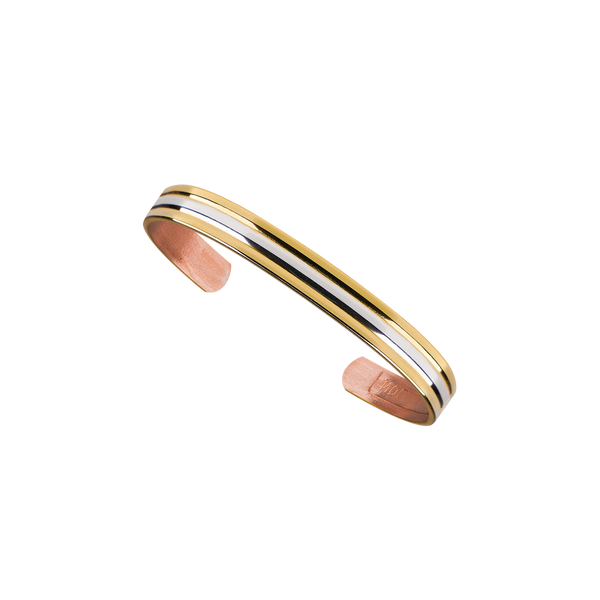
For a silver- or gold-plated copper bracelet, look at the surface that actually touches your wrist. A plated exterior does not necessarily prevent staining if the inside remains exposed copper. Check the description of your chosen design rather than judging by its outer colour alone.
Use a gentle approach on plated or lacquered surfaces. Abrasive polishing can wear away the finish, and acidic household cleaners are not suitable for every bracelet.
For more detailed guidance, read How to Clean and Care for a Copper Bracelet, taking care to follow advice appropriate to your bracelet’s particular finish.
Frequently Asked Questions
Why does my copper bracelet turn my wrist green?
Exposed copper can react with moisture, perspiration and substances on the skin. This can create copper compounds that transfer to the skin as a temporary greenish residue.
Does a green mark mean my copper bracelet is faulty?
No. A green mark alone does not mean that a copper bracelet is defective. It can be a normal result of exposed copper reacting with moisture and substances encountered during everyday wear.
Will every copper bracelet turn skin green?
Not necessarily. The reaction varies according to the wearer, moisture, perspiration, skincare products, the amount of exposed copper and whether the bracelet has a protective or plated finish.
How do I remove a green copper mark from my skin?
Wash the area gently with mild soap and warm water, then rinse and dry it. Avoid using jewellery cleaners or metal-polishing products on your skin.
Can I stop a copper bracelet from leaving green marks?
Keeping your wrist and bracelet clean and dry can help reduce residue, but occasional marks may still occur where natural copper is exposed. Protective finishes may reduce direct contact initially, although these finishes can gradually wear with use.
Is a green copper mark an allergic reaction?
A green surface stain is different from symptoms such as persistent redness, itching, blistering or irritation. If you experience those symptoms, remove the bracelet and seek medical advice if they persist or are significant.
The Natural Character of Copper
Copper has been valued in jewellery for thousands of years for its warm colour, distinctive appearance and the way its surface can develop character over time.
At SABONA, we have been creating distinctive copper bracelets since 1959. More than six decades of British heritage have given us a deep appreciation for copper not only as a material, but also as part of jewellery design and everyday personal style.
Understanding how natural copper responds to wear makes it easier to enjoy its individual character with confidence. Choose the design you love, give it a little regular care and make it part of your everyday wardrobe.
Explore SABONA Copper Bracelets
Further reading: Nebraska Medicine: Why does some jewellery turn my skin green? · DermNet: Jewellery allergy




 English
 العربية
 繁體中文
繁體中文 Français
 日本語
日本語 한국어
한국어 Português
 Español